Word Scrambles
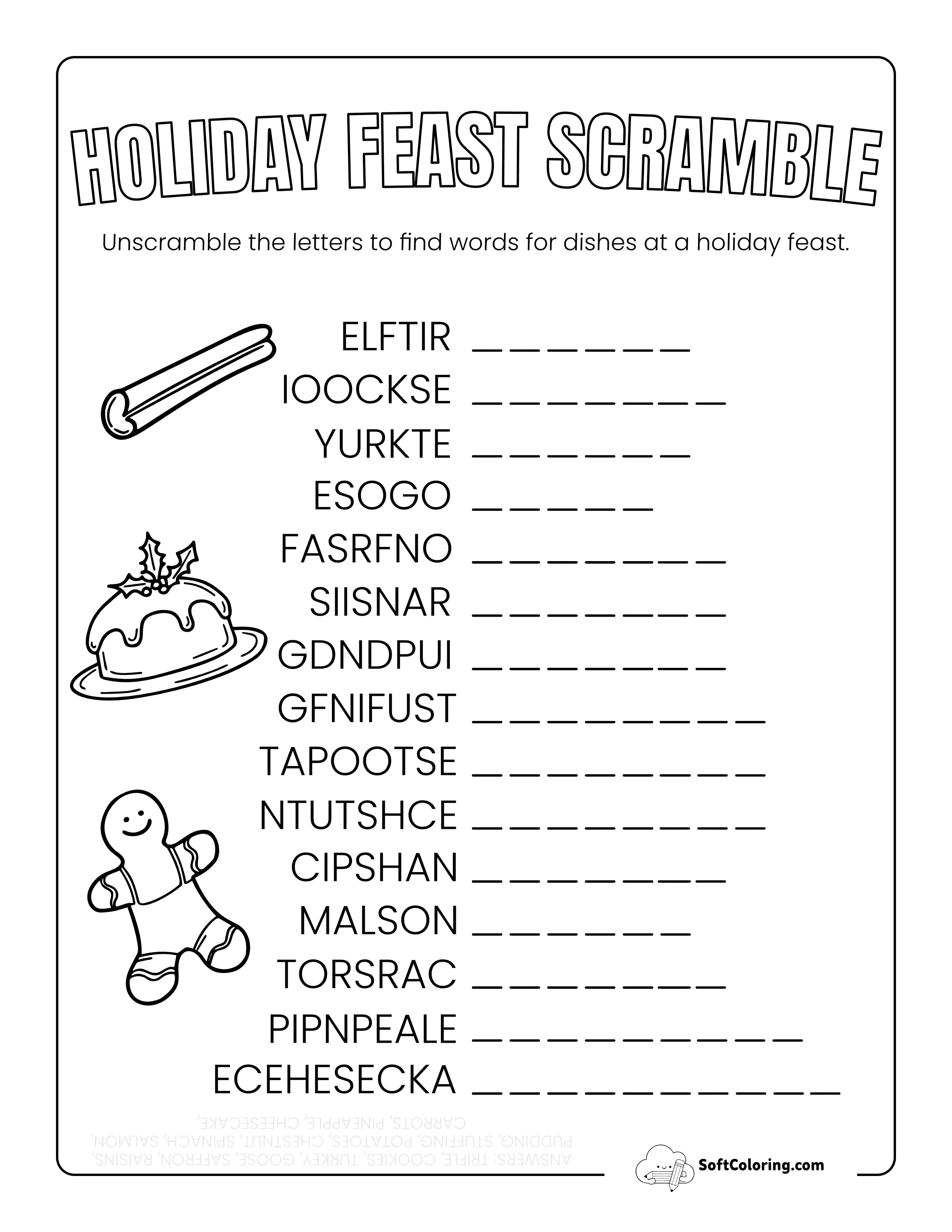
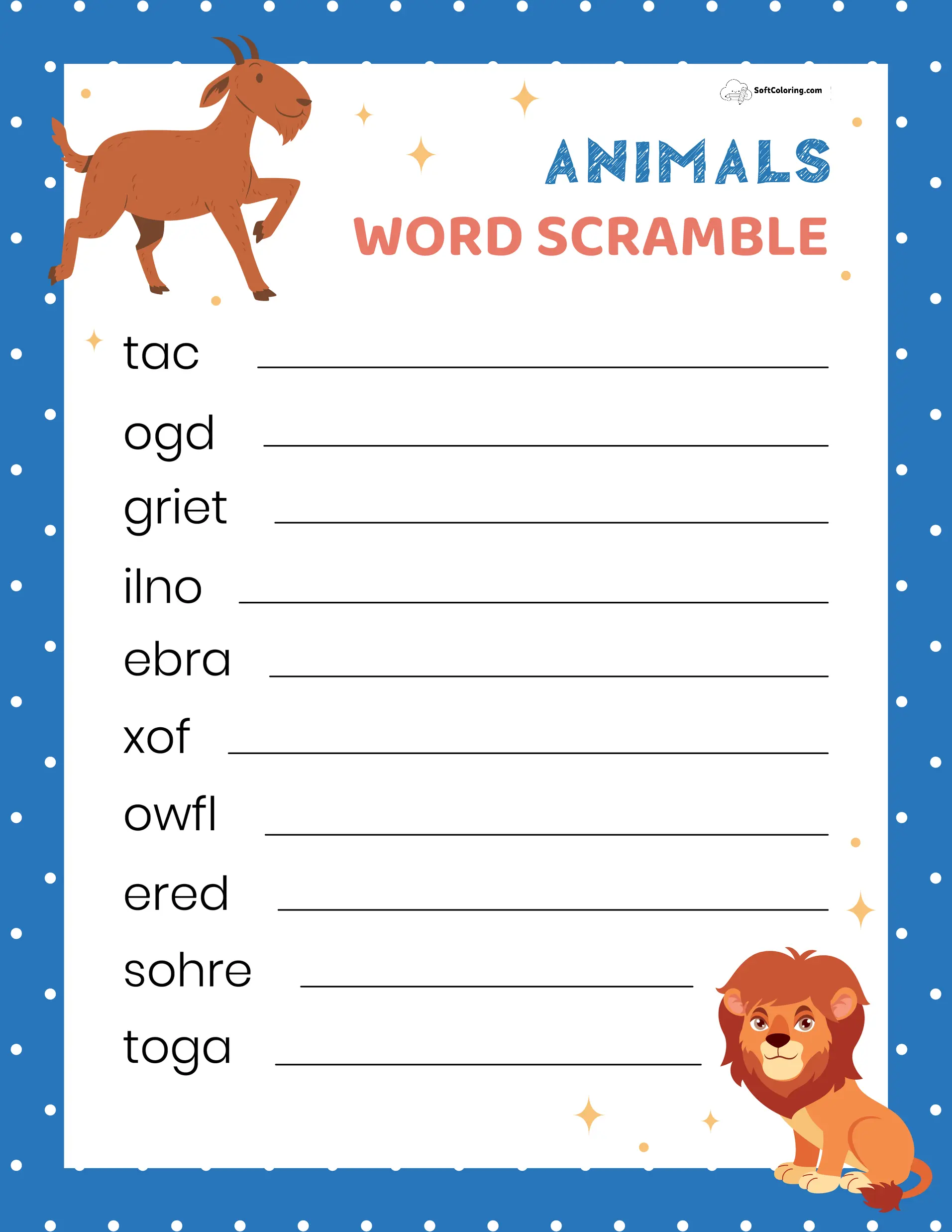
Turn mixed-up letters into a quick word challenge with our free Word Scrambles! This collection includes themed puzzles covering Christmas, animals, numbers, fruits, vegetables, and more. Each puzzle gives kids a set of scrambled letters to rearrange into the correct words, making it an easy printable for vocabulary practice, classroom games, brain breaks, or a little screen-free fun at home.
Can't Find What You're Looking For?
Let us know what you want to color next, and our team will draw it for you!
Request a Coloring Page
Strengthening Literacy & Cognitive Skills Through Playful Puzzles
A simple word game for building spelling confidence and flexible thinking.
Spelling & Word Recognition
Encourage critical thinking, letter-pattern recognition, and spelling mastery through engaging, theme-based word scrambles.
Brain Gym & Fine Motor
Combine left-brain logic (solving word puzzles) with right-brain creativity (coloring details) for a complete learning workout.
Think Before You Write
Everything you need to know about downloading, printing, and using our Word Scrambles worksheets.
Frequently Asked Questions
Are answer keys included with these Word Scramble coloring pages?
What age group are these printable puzzle sheets best suited for?
Can ESL/ELL teachers use these for language practice?
When a Few Mixed-Up Letters Become a Game
There is something satisfying about spotting a familiar word hiding behind a messy row of letters. Word scrambles turn that simple idea into a small puzzle that kids can solve at their own pace.
Instead of memorizing a list of vocabulary words, children have to look closely, rearrange possibilities, and recognize when the letters finally make sense. Some answers may come quickly; others take a few guesses. That little bit of trial and error is part of the fun.
These worksheets can work as a standalone activity or as a quick addition to a lesson when you need something that requires more participation than simply copying words.
Explore Different Themes
The collection is organized around familiar topics, so it is easy to find a puzzle that matches what kids are already learning or what they happen to enjoy.
Christmas Word Scrambles bring seasonal vocabulary into the puzzle, with words connected to decorations, celebrations, gifts, and other Christmas favorites.
Animals Word Scrambles are a natural fit for younger learners. Kids can unscramble names of pets, farm animals, wild animals, and other creatures they already recognize.
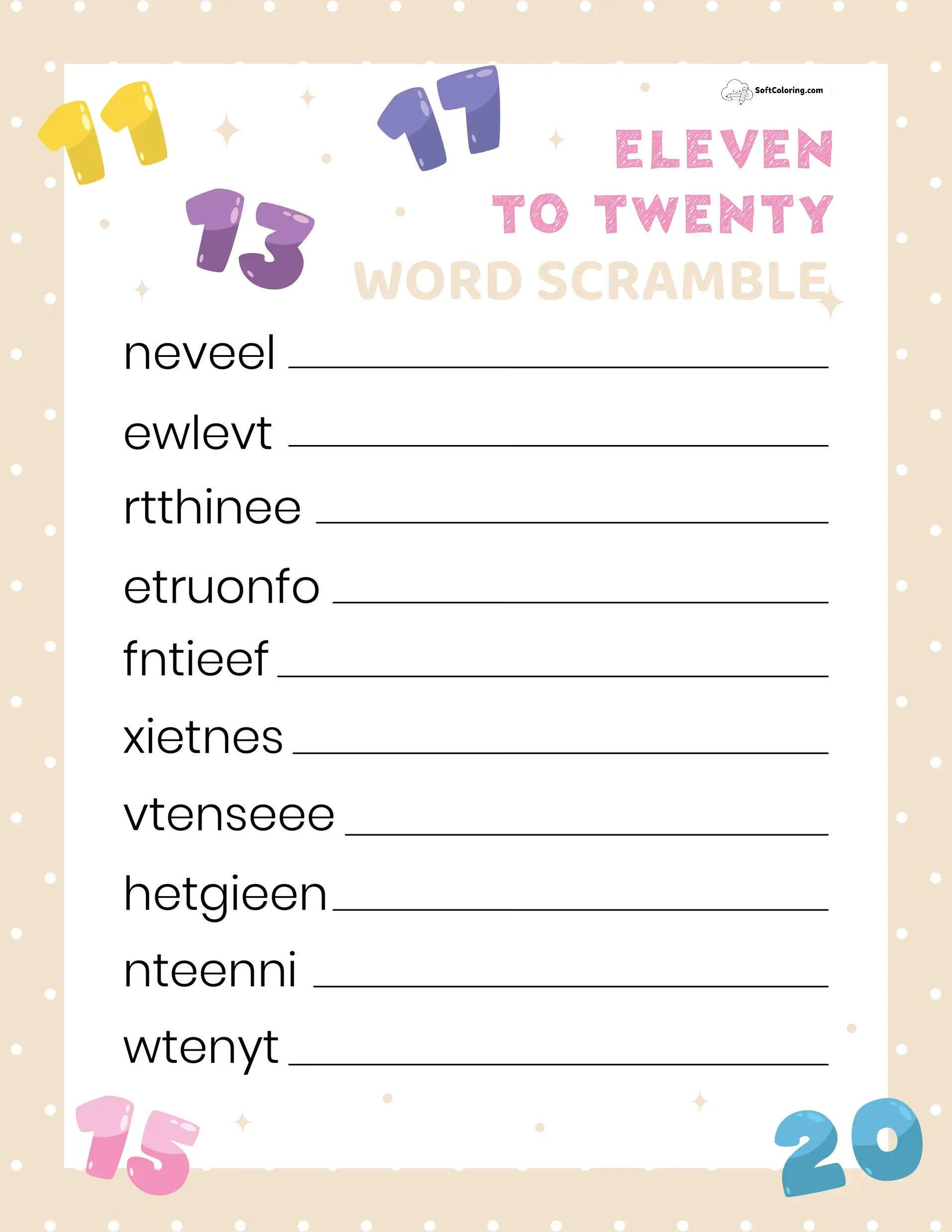
Numbers Word Scrambles give children another way to work with number names. They can be useful when practicing basic number vocabulary and spelling.
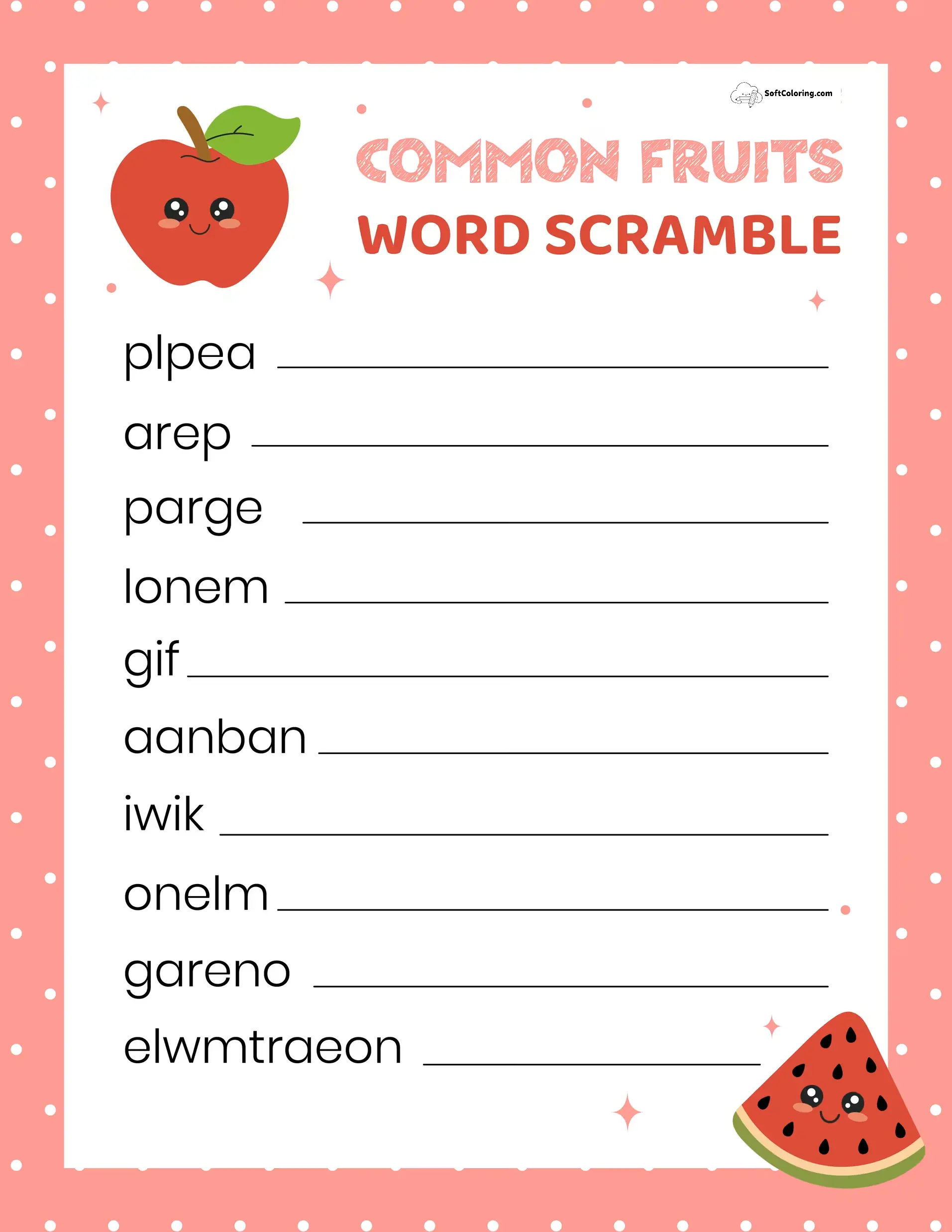
Fruits Word Scrambles turn familiar foods into a vocabulary challenge, from everyday favorites to less common fruit names.
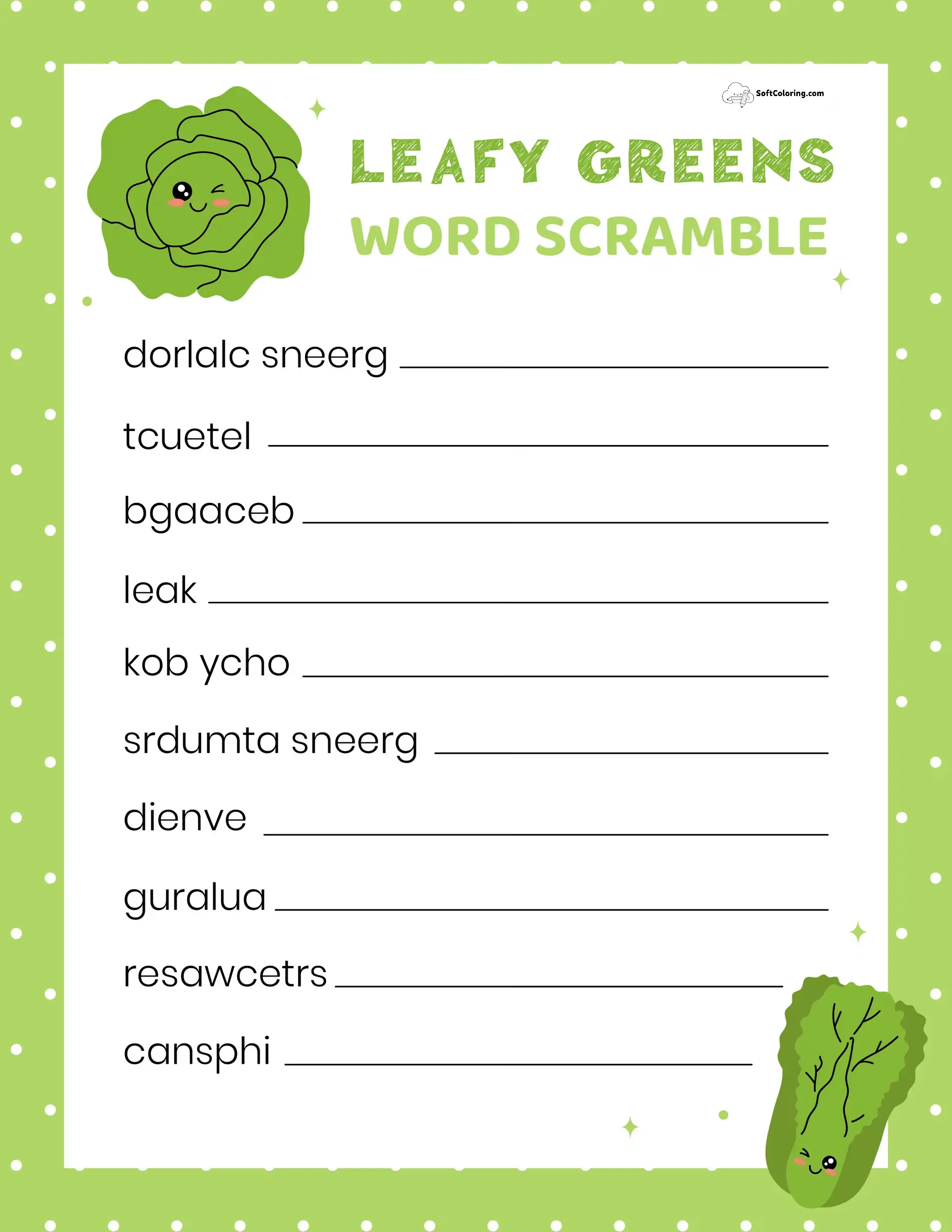
Vegetables Word Scrambles offer another food-themed option and can fit nicely into lessons about food, healthy eating, or everyday vocabulary.
More Than a Worksheet
A printed scramble does not have to stay on a desk. Teachers can turn the puzzles into a quick race by dividing students into small groups and seeing which team can solve a set of words first. For younger children, solving one word together can be a useful warm-up before letting them try the rest independently.
At home, parents can print a themed sheet for a rainy afternoon, a road trip, or a quiet activity between other plans. You can also give children a small hint when they get stuck rather than revealing the answer straight away.
Another simple idea is to ask kids to use each solved word in a sentence or draw a picture of it. Suddenly, a five-minute word puzzle becomes a short vocabulary activity.
A Handy Option for Different Skill Levels
Not every child approaches word puzzles in the same way. Some will recognize the answer almost immediately, while others need to write the letters out several times before seeing the word.
For beginners, start with themes they know well, such as animals or fruits. More confident readers can try less familiar vocabulary or complete several puzzles without hints.
You can also make the activity collaborative. Pairing two children together lets them discuss possible answers, compare ideas, and explain why a particular arrangement works.